Pocket Shuffle Chess
Best for: a few focused minutes, fresh starts, and immediate contact.
Compact 5×6 boards, mirrored shuffle seeds, AI play, puzzles, and friend challenges.
Compare chess formats
Full-board chess, Chess960, mini chess, and daily games solve different problems. Compare the tradeoffs, then play the format that gets you to an interesting decision fastest.
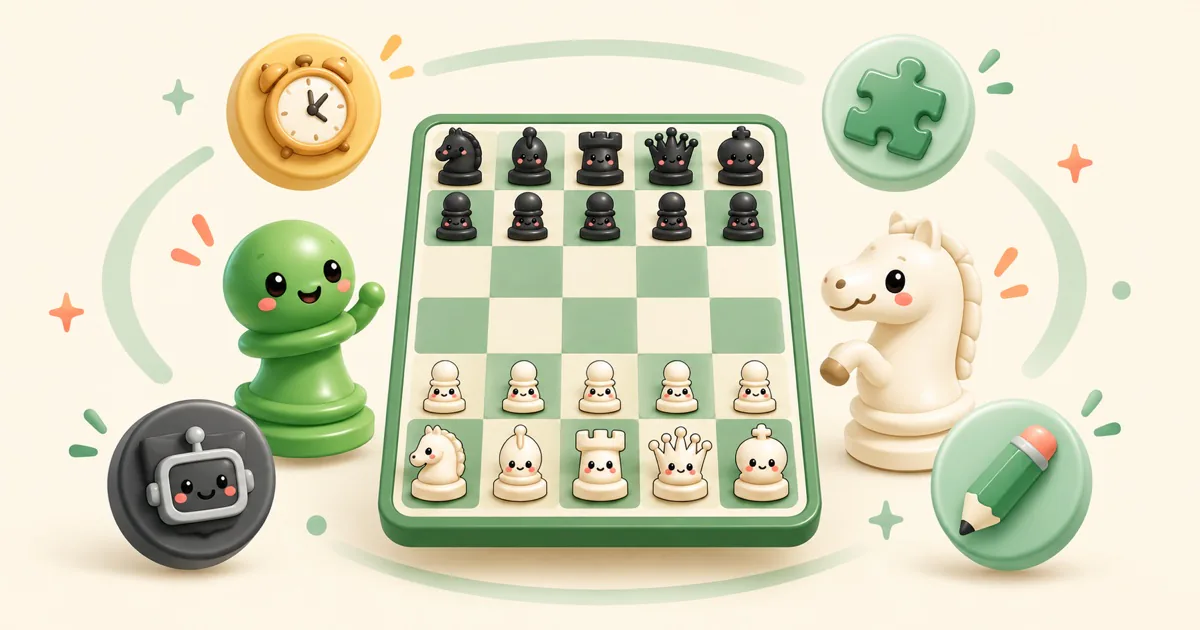
Pocket Shuffle Chess does not replace traditional chess. It is the better fit when you want a short tactical session, a fresh seeded setup, and no opening homework.
Quick fit guide
No fake winner. Each format is good at a different job.
Best for: a few focused minutes, fresh starts, and immediate contact.
Compact 5×6 boards, mirrored shuffle seeds, AI play, puzzles, and friend challenges.
Best for: traditional improvement, ratings, opening study, and long-form depth.
The complete 8×8 game with the richest theory, ecosystem, and competitive history.
Best for: experienced players who want unfamiliar openings without shrinking the board.
A shuffled back rank on the full 8×8 board keeps standard-chess depth and endgames.
Best for: one shared challenge, a clean stopping point, and quick comparison with friends.
A strong habit loop, but usually a single puzzle rather than a complete tactical chess game.
Choose Pocket Shuffle Chess when time is short but you still want real checks, captures, king safety, promotions, and tactical consequences. Choose traditional chess when you want the full game and the study that comes with it.